

Losing teeth is rarely just a dental issue; it is a deeply personal experience that affects how you interact with the world. Many people find that missing teeth change how they speak, what they eat, and how often they feel comfortable smiling in photos. Beyond the feelings, there is the functional side, the struggle to chew favorite foods or the worry that remaining teeth might shift.
This decision usually comes down to one question: Do you need a tooth-by-tooth solution, or is it time for a full-arch approach? It’s important to understand the nuances between traditional implants and the All-on-4 method.
What Traditional Dental Implants Are
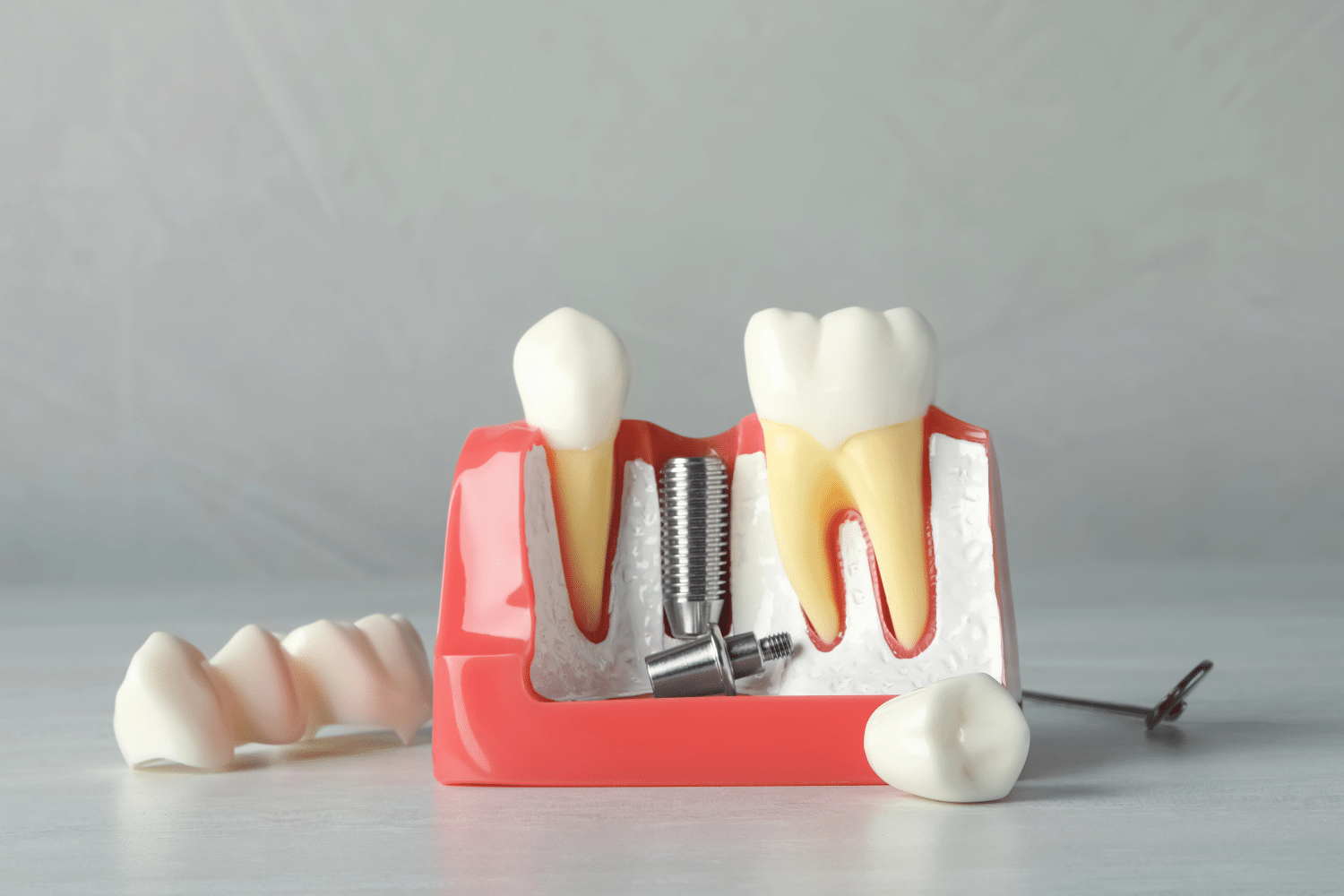
Traditional dental implants are the standard for replacing individual missing teeth. Each implant consists of a small titanium post that a dentist places into the jawbone. This post acts as a replacement for a natural tooth root. Because titanium is biocompatible, the bone grows around the post, creating a sturdy base for a custom crown.
The timeline for traditional implants is often a steady process. After the post is placed, the jaw needs several months to heal and integrate with the metal. Once that bond is strong, a connector called an abutment is added, followed by the final porcelain crown.
This method makes the most sense when you have a single gap or a few missing teeth spread throughout your mouth. It allows you to address specific areas without affecting the healthy teeth nearby. It is a one-to-one replacement strategy that mimics the natural structure of your mouth.
What All-on-4 Really Means
All-on-4 is a different strategy designed for full-arch restoration. Instead of replacing every single missing tooth with an individual implant, this method uses four strategically placed implants to support an entire bridge of teeth.
The secret to this method lies in the placement. Two implants are placed vertically in the front, while two more are placed at an angle in the back. This angled placement helps the bridge stay secure even in areas where the bone might be thinner. Because of this design, patients can often receive a temporary set of teeth on the same day as their surgery.
This system is designed for people who are missing most or all of their upper or lower teeth. It provides a fixed, non-removable bridge that looks and acts like natural teeth, eliminating the need for sixteen individual implants to replace a full set.
Key Differences at a Glance
| Feature | Traditional Implants | All-on-4 |
|---|---|---|
| Number of Implants | 1 per missing tooth | 4 per jaw |
| Treatment Time | Several months to a year | Often much faster |
| Recovery | Faster per tooth, but more surgeries | One surgical event |
| Bone Needs | High density required | Works with lower bone volume |
| Maintenance | Brush and floss like natural teeth | Special flossing under the bridge |
| Cost | High for full-mouth replacement | Often lower for full-arch |
When Traditional Implants Are the Better Choice
Traditional implants are often the superior choice for patients who only have one or two missing teeth. If the rest of your smile is healthy and functional, there is no reason to disturb those natural teeth.
These implants work best for patients with strong bone density. Since the implant relies on a specific spot in the jaw, that spot must be thick enough to hold the post. This is also the preferred route for patients who want a tooth-by-tooth solution, allowing them to replace teeth over time as their budget or schedule allows. It preserves the integrity of the jawbone in specific locations and keeps the surrounding teeth from shifting.
When All-on-4 Is the Better Option
All-on-4 is often the better option for those with multiple missing or failing teeth. If you currently wear dentures that feel unstable, slip while you talk, or require messy adhesives, this method offers a life-changing shift.
It is particularly helpful for patients who have experienced jawbone loss. Because the implants are angled, they can often avoid the need for bone grafting, which is a common requirement for traditional implants in thin bone. If you want a fixed, full smile without the wait of multiple surgeries and healing phases, All-on-4 provides a streamlined path to a complete set of teeth.
Lifestyle and Practical Considerations
Your daily routine plays a big part in this choice. Both options provide excellent comfort when eating and speaking, especially compared to removable dentures. You will find you can bite into apples or enjoy a steak without worrying about your teeth moving.
Cleaning and care differ slightly. Traditional implants are brushed and flossed exactly like your original teeth. All-on-4 bridges require you to clean under the bridge using a water flosser or specialized threaders.
In terms of your schedule, traditional implants might require more appointments over a longer period. All-on-4 involves more time upfront but usually results in fewer visits to the office overall. This means less time away from work and a faster return to your normal life with a functional smile.
Also Read: Are Dental Implants Safe? The Risks and Benefits
Cost and Value Perspective
The financial aspect is a major factor. Traditional implants involve an upfront investment for each unit. If you are replacing an entire arch tooth-by-tooth, the cost can become very high. However, if you are only replacing one tooth, it is very manageable.
All-on-4 often represents a better value for full-mouth reconstruction. While the initial price tag for the procedure seems high, it covers the entire arch. You also save on the costs associated with bone grafting or multiple surgical visits.
When looking at insurance and financing, many providers see these as restorative procedures, though coverage varies. Most offices offer payment plans to help break the investment into monthly amounts that fit your budget.
What the Consultation Should Cover
A professional evaluation is the only way to know for sure which path is yours. During this visit, expect digital imaging and a bone evaluation. This allows the dentist to see the hidden landscape of your jaw.
A health and history review is also a part of the process, as certain conditions or habits can affect how you heal. Your dentist will perform a bite and smile assessment to see how your teeth come together. Finally, you should leave with a timeline and a clear discussion of the trade-offs of each method. This is the time to ask questions about recovery and what to expect during the healing weeks.
Common Myths About Full-Arch Implants
There are several misconceptions that can cloud your decision-making.
- All-on-4 is only for older patients: While many older adults benefit from this, it is also a solution for younger people who have suffered from dental trauma or genetic tooth issues.
- Traditional implants take too long: While the process is slower, the stability and longevity are often worth the wait for those with healthy bone.
- You always need bone grafting: Many people believe they aren’t candidates for implants because of bone loss, but All-on-4 was specifically created to work around that.
- One option is always better: The truth is that the best option depends entirely on your anatomy and your life.
Making the Right Choice
Choosing between these two paths means matching the treatment to your personal needs. You must balance your time, your budget, and the result you want to see in the mirror. There is no universal answer that works for every person.
The process is about individualized planning. What works for a neighbor might not be the right fit for your bone structure or your lifestyle. By looking at the long-term benefits of each, you can move forward with a plan that feels right for you.
Conclusion
Both traditional implants and All-on-4 are remarkable tools that restore function and confidence. They allow you to stop worrying about your teeth and start focusing on your life. The right solution depends on the current state of your smile and where you want it to be in the future.
Taking the time to learn about these paths leads to better results. A personalized plan changes everything, turning a source of stress into a reason to smile again.
Are you ready to find out which implant solution fits your life?
